
‘The Iranians have every interest in encouraging Hezbollah to violate the ceasefire, enabling them to demand further concessions from the President to keep the Strait open…’
ed note–another eye-opener that every war-weary Gentile with a vested interest in his/her own future survival needs to read, understand, and take deeply to heart.
Firsto, ladies and Gentile-men, if it is one thing that we Gentiles have in our favor as regards the war of survival against the Hebraic menace that seeks our destruction, it is the fact that they almost always choreograph what they intend to do to us before pulling the trigger and/or lighting the fuse…
…and in this case, true to form, the religious terrorist is saying it in plain language, to wit–
1. That Israel plans to ‘blow up’, literally and not figuratively, POTUS DJT’s MoU with Iran…
and–
2. That Lebanon will be the ‘bomb’ that does the exploding…
So, how in fact do they, the ‘Children of Israel’ as they love to refer to themselves, plan to use the issue of Lebanon/Hezbollah to ‘blow up’ POTUS DJT’s MoU with Iran?
The terrorist Jew who authored the piece makes it Kristol clear, ladies and Gentile-men, to wit–
‘The Iranians have every interest in encouraging Hezbollah to violate the ceasefire, enabling them to demand further concessions from the President to keep the Strait open…’
Home in on 3 items–
1. ‘Hezbollah’…
2. ‘Violate’…
3. ‘Ceasefire…’
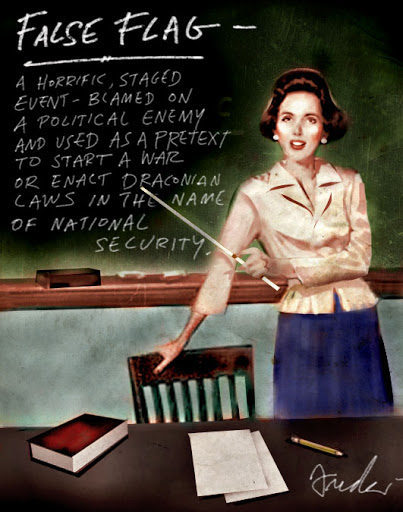
In other words, what the Jews are planning to do is to launch rockets from Lebanon into Israel, hit a school full of Jewish kids or some other high-casualty civilian location, blame it on Hezbollah/Iran, and thus, ‘blow up’ POTUS DJT’s MoU that ‘robs’ the Jews of the same WWIII/Armageddon that they have been planning now for the last 3,000 years.
As we say often here on this humble little informational endeavor, of the many, MANY uncomplimentary (but true) things that can be said about them, the ‘Children of Israel’, the one thing that CANNOT be said about them is that they are stupid, because they most certainly ARE NOT.
Michael Oren for Israel Hayom
The Trump administration’s creation this week of a ‘cell to reduce friction’ in Lebanon, comprised of Pakistan, Qatar, and Iran and totally ignoring Israel, has heightened Israeli anxiety over America’s MOU with Tehran that grants the Islamic Republic billions of dollars to rebuild its ballistic missiles and resupply its terrorist proxies while doing little or nothing about its nuclear threat.
Understandably, Israelis are asking what, if any, are chances that the agreement will fail?
Not surprisingly, the most obvious cause for the agreement’s failure would be Lebanon. Trump has allowed Iranian leaders to use Lebanon as leverage against the United States by threatening to close the Strait of Hormuz unless he reins in Israel.
As such, the Iranians have every interest in encouraging Hezbollah to violate the ceasefire, enabling them to demand further concessions from the President to keep the Strait open.
But Trump could say ‘enough’ and sever the Hormuz-Lebanon connection. He came close to doing this earlier in the week when he threatened to ‘destroy Iran’ if it failed to stop Hezbollah from firing on Israel. In response to this insult, Iranian representatives walked away from the negotiating table. Further insults from the White House could bring about the collapse of the talks entirely.
Trump could also work to drag out negotiations on the agreement’s implementation, set to take place over sixty days, for an additional five months. This would enable the President to avoid any politically costly fighting with Iran until after the mid-term elections in November. With the Republican majority in both Houses once again secured, the administration could once again present Iran with a credible military option and, if necessary, renew the bombing campaign.
Lastly, the Iranians themselves might undermine the talks by overplaying their hand. The regime would make outrageous demands such as a total withdrawal of U.S. forces from the Middle East or the imposition of exorbitant tolls on maritime traffic through the Strait. Faced with such excessive demands, Trump would have no choice but to jettison the agreement.
More long-term, the Iranian regime might eventually die from the wounds it sustained in the war. Mass demonstrations might once again erupt and deep divisions appear in the Iranian leadership. With a new government in Tehran issues such as the country’s nuclear and ballistic programs and its support for terror could be easily resolved.
Unfortunately, all of these scenarios, while theoretically possible, can only be couched as hopes, and in Israel, we cannot build our policies on hopes but rather prepare for the worst-case and most probably realistic outcome of a U.S.-Iranian deal that excludes many of our fundamental security interests and confronts us with many future dangers.
Until that happens, though, Israel must continue to defend the north, even at the price of friction with Washington, and to state unequivocally that any agreement that does not protect us from Iran will never bind us.