
ed note–as always, lots of ‘must knows’ that every Gentile with a vested interest in his/her own future survival needs to understand about all of this.
Firsto, fellow Gentiles, let us begin this important discussion with several important understandings–
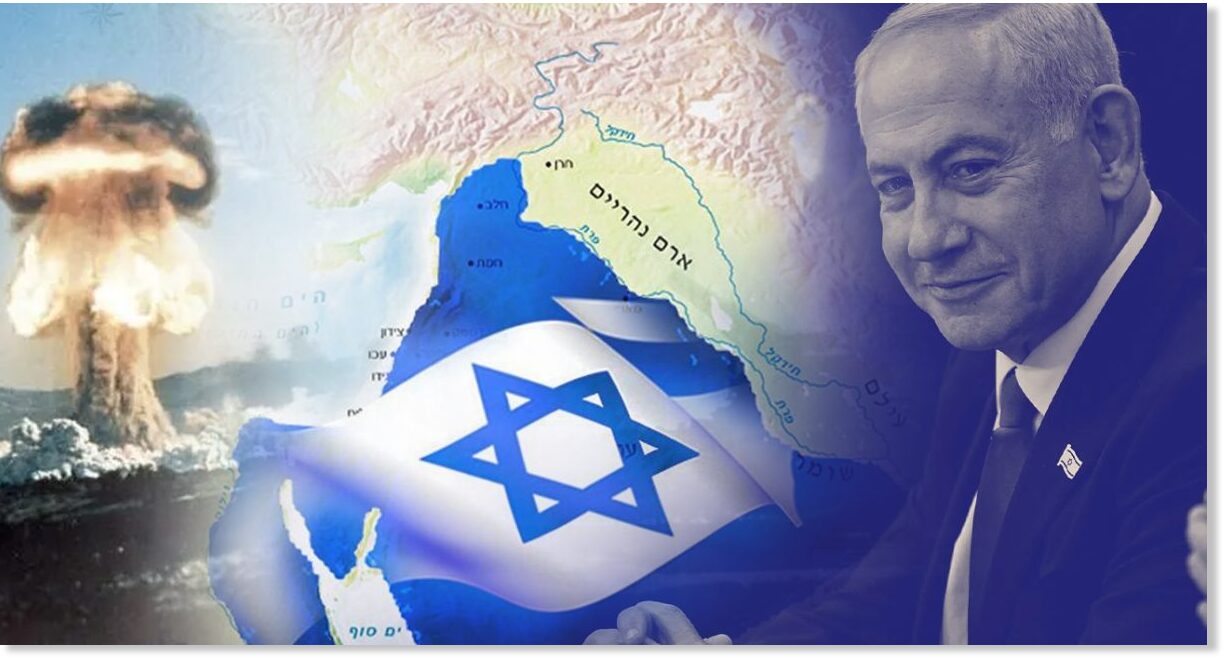
1. The Jews are 666% intent upon conquering and stealing the entire Middle East from the Nile to the Euphrates rivers, exactly as the terrorist creed they follow, Torah Judah-ism, commands them to do, to wit–
‘And God spoke unto us saying, ‘Go to the hill-country and all the places nigh thereunto… in the Arabah, the hill-country and in the Lowland… in the South and by the sea-shore, the land of the Canaanites, and Lebanon, as far as the great river, the river Euphrates…Go in therefore and possess the land which the Lord swore unto your fathers, to Abraham, Isaac, and Jacob, unto them and to their seed after them…’ –Book of Deuteronomy 1:6–8
2. They don’t give a good Goddamn about the Druze or any other group of non-Jews. Within the twisted and sick neural network functioning deep inside the highly-dysfunctional Jewish brain, they are Gentiles, ‘Goyim’, and that means they are less than human, as clearly stated by Israel’s former Chief Sephardic rabbi Ovadiah Yosef shortly before he died and went home to hell for the big ‘family reunion,’ to wit–
‘With Gentiles, it will be like any person – they need to die, but God will give them longevity. Why? Imagine that one’s donkey would die, they’d lose their money. This is his servant…That’s why he gets a long life, to work well for the Jew. Gentiles were born only to serve us. Without that, they have no place in the world – only to serve the People of Israel’.
3. Netanyahu and the rest of the religious terrorists making up his Kosher Nostra government are furious with POTUS DJT for lifting sanctions on Syria, for his referring to its new leader glowingly/admiringly as a ‘strong’ and ‘handsome’ guy, and his talk about ‘making Syria great again’.
This is NOT ‘the plan’ as far as the Jews are concerned, and therefore, in order to subvert what it is that POTUS DJT is trying to do, they have manufactured this latest instability in order to justify what it is that they are doing now and what they have been planning to do for the last 3,000 years, which is the Judaic conquest of Syria as the necessary pre-req in absorbing it into ‘Greater Israel’.
And finalmente, last but certainly not least, ladies and Gentile-men–
4. No one should doubt for a micro-millisecond that all the recent upheaval in Syria is tied to Netanyahu’s recent visit to DC and his meeting with POTUS DJT, after which time, SURPRISE, SURPRISE, WHAT A COINCIDENCE, the scandal involving the Jewish spy Epstein erupts and threatens to destroy the entire MAGA political movement that POTUS DJT created.
In sum, POTUS DJT stated right before Netanyahu’s arrival that he planned on being ‘very firm’ with the Judaic warlord, but in all likelihood, Netanyahu ‘came prepared’ and turned the tables on what it was that POTUS DJT had planned on doing, which includes, among many other items, everything that is taking place in Syria right now.
Haaretz
The cease-fire announced Wednesday by Sheikh Youssef Jarbouh, one of the spiritual leaders of Syria’s Druze community, between Druze factions in Sweida and forces aligned with the Syrian regime, is now facing a crucial test on the ground.
This is the second such agreement this week. The first broke down almost immediately. The new deal should be approached with caution, not least because it remains unclear who signed it and whether the relevant forces will honor it.
Jarbouh, one of three senior Druze religious leaders in Syria, is known for supporting cooperation with the government of President Ahmed al-Sharaa and opposing foreign interference in Druze affairs, including from Israel. He also opposes the creation of a Druze autonomous region and sees the community’s future as firmly rooted within the Syrian state.
Absent so far is any comment from the Druze’s most influential spiritual leader, Sheikh Hikmat al-Hijri. He is a vocal critic of efforts to integrate Druze militias into the Syrian army and views al-Sharaa as a jihadist who continues to rely on extremist militias, some foreign, some domestic, that he does not fully control. Al-Hijri accuses al-Sharaa of waging a campaign of extermination against the Druze.
A third leader, Sheikh Hammoud al-Hinnawi, is seen as less influential, but his support is still considered essential for presenting a unified Druze position on any cease-fire.
It is also unclear which Druze militias have joined the agreement. Their loyalties vary based on affiliations with different leaders, but many operate independently.
The Men of Dignity militia, the largest and estimated at 5,000–8,000 fighters, supports cooperation with the government. In contrast, the Mountain Brigade, also numbering in the thousands, rejects both the regime and the integration plan.
In the Druze-majority city of Sweida, another group, the Military Council, was formed in February under the command of a senior officer who defected from the Syrian army.
The Syrian regime’s commitment to the cease-fire is equally ambiguous. While it formally signed the agreement, it remains uncertain whether it can enforce it among the dozens of militias still operating outside formal military structures.
Even referring to a ‘Syrian army’ can be misleading: Though the Defense Ministry says around 130 militias have agreed to join what it calls a ‘National Army,’ many others, including armed Bedouin groups, remote city militias, Kurdish forces and most Druze factions, remain outside its control.
The deadline for militias to integrate into the army passed in late May. In theory, the government can now forcibly disarm those who refuse, except for the Druze and Kurdish groups, which signed only preliminary agreements.
Even among those who have agreed, integration is slow and complicated. Recruits are drafted individually, not in units, to prevent lingering loyalty to their former militias. Many are still waiting for military academy training, some of which have yet to be built.
In practice, the Syrian army remains reliant on the same Islamist militias that backed al-Sharaa during the civil war, particularly elements of Hay’at Tahrir al-Sham. Many fighters hail from Chechnya, Russia, Jordan and Egypt, and some have been promoted to senior army roles. Whether they can command troops from outside their original ranks is an open question.
Meanwhile, some fighters have splintered from Hay’at Tahrir al-Sham after the fall of Bashar Assad’s regime and now lead independent militias opposing al-Sharaa.
These groups accuse the new president of betraying Islamic principles and collaborating with the ‘enemies of Islam.’ According to reports from Syria, some have even joined remnants of ISIS and are believed to have carried out terror attacks, including the June bombing at Mar Elias Church, which killed at least 25 people.
This fragmentation means al-Sharaa is now fighting for control on multiple fronts: consolidating militias into a national army, dismantling rogue armed gangs, projecting power to Israel and the United States by cracking down on Hezbollah and trying to maintain control over the roughly 70 percent of Syrian territory still under his rule.
Given this complex reality, few put much faith in al-Sharaa’s vow to ‘act decisively against lawbreakers’ or bring perpetrators of recent violence to justice. Similar promises followed the March massacre of more than 1,700 Alawites, but no investigation has concluded, and no one has been held accountable. The same is true for the Mar Elias bombing.
Still, this latest cease-fire may have a better chance of holding due to increased U.S. diplomatic involvement and pressure on both al-Sharaa and Israel to de-escalate.
What is Israel trying to achieve?
As in the previous round of Druze-militia clashes in March, Israel has entered the picture without clearly articulating its objectives or a coherent long-term policy.
Initially, the IDF said it struck Syrian tanks advancing toward Sweida to enforce the 1974 disengagement lines, arguing that their presence posed a threat to Israel’s northern border. ‘The IDF will not allow a military threat in southern Syria and will act against it,’ a statement read.
Shortly afterward, Israeli officials offered a different justification: that the airstrikes, which expanded to target Syria’s General Staff building and presidential palace, were meant to protect ‘our Druze brothers’ and pressure the Syrian government into halting the bloodshed.
But if that’s the case, why not let the army deploy to Sweida in the first place? And if Israel believes al-Sharaa can restore order, why not use existing communication channels instead of launching airstrikes? On the other hand, if Israel believes he is unwilling or unable to protect the Druze – or worse, is actively orchestrating their destruction, as al-Hijri has claimed – is Israel now preparing for open conflict with the Syrian regime?
Israel’s strong ties to its own Druze citizens are not in question. And there is a legitimate argument that this bond extends to a broader responsibility to protect Druze communities in Syria, or any minority at risk of genocide.
At the same time, many Druze leaders in Syria openly reject Israeli involvement, insist on remaining part of the Syrian state and seek to secure their rights through cooperation with al-Sharaa, not by becoming an Israeli client community.
The deeper question is whether Israel has a broader policy on Syria, and how that policy aligns with protecting Druze civilians while simultaneously attacking the regime.
Some Arab and Syrian commentators believe Israel aims to use the Druze as a foothold to promote the cantonization of Syria, carving the country into Druze, Kurdish and possibly Alawite regions. This would give Israel supportive enclaves on its borders and help thwart al-Sharaa’s plan for a unified state while countering Turkish influence.
If such a strategy exists and no Israeli official has publicly confirmed it, it would clash not only with al-Sharaa’s ambitions but also with those of the United States and Arab governments.
Washington remains committed to a unified Syrian state under centralized rule. U.S. President Donald Trump views al-Sharaa as a legitimate leader and backs him diplomatically and economically. U.S. strategy aims to withdraw its forces from Syria and hand over the fight against ISIS to the Syrian government and Turkey.
Trump is also pushing for coordination agreements between Israel and Syria and expressed hope for normalization. However, an Israeli war against the Syrian regime, even in defense of the Druze, would undermine these efforts.