
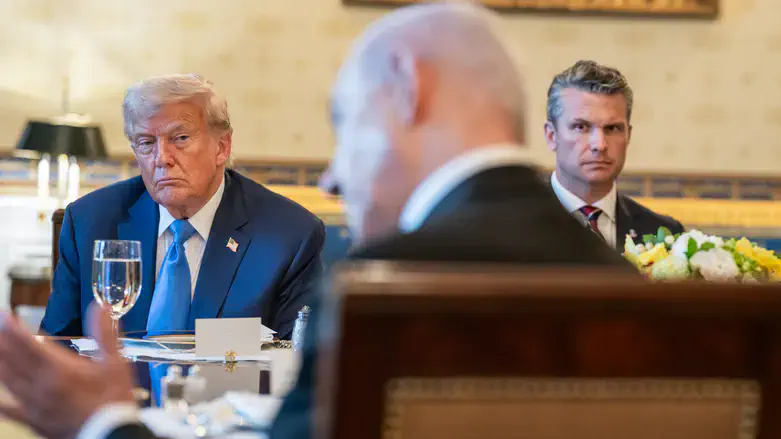
Trump’s Middle East plan initially seemed to align with Israeli interests. Just two months later however, the U.S. is now advancing a path to Palestinian statehood
Ynet News
The U.S. decision to bring President Trump’s 20-point plan to a vote at the United Nations Security Council signals a troubling shift for Israel and further evidence of diverging American and Israeli interests in shaping the future of the Middle East.
Many in Israel initially welcomed Trump’s plan to reshape the region. At the outset, it appeared to align entirely with Israeli interests: returning hostages, ending the war under terms favorable to Israel, maintaining control over key parts of Gaza without requiring Israeli withdrawal — all were seen, and still are, as significant diplomatic achievements. The plan also called for the disarmament of Hamas and an end to its control of Gaza, aligning with the Israeli government’s stated war goals and reflecting the close cooperation between Trump and Prime Minister Benjamin Netanyahu.
Yet hidden between the lines of this ambitious initiative lie two significant threats that the Israeli government has either ignored or overlooked in its eagerness to secure the return of the hostages. These threats could prove disastrous for Israel, even if not immediately.
The first is Turkey’s growing influence in Middle Eastern power centers. President Erdoğan has made no secret of his imperial ambitions or his hostility toward Israel. A Turkish foothold in both Gaza and Syria could create a new and dangerous Sunni axis, replacing the Shiite one Israel has worked to dismantle.
The second threat is the roadmap being presented to the UN Security Council for the establishment of a Palestinian state.
This is not the first time the UN has taken up the question of Palestinian statehood. Until now, most such initiatives passed easily in the General Assembly, while the Security Council — with the power to adopt binding resolutions — was consistently blocked by U.S. vetoes protecting Israel from anti-Israel or pro-Palestinian resolutions.
This time however, it is the U.S. itself driving a resolution that lays the groundwork for a Palestinian state. The wording of the plan marks a stark departure from Trump’s earlier declarations favoring voluntary migration, which had represented a break from the two-state paradigm. Now, it seems the administration has abandoned that idea entirely. The new plan not only omits any reference to migration, but actively encourages Gazans to remain and ‘build a better Gaza.’
Just two months ago, in September, the Saudi-French plan calling for a Palestinian state passed in the UN General Assembly by a landslide — 142 in favor, with only ten opposed, including the U.S. At the time, the U.S. ambassador criticized the plan, calling it a ‘gift to Hamas.’
Now, that same United States is promoting a path to a Palestinian state that could pose an existential threat to Israel.
Israel appears to be on a dangerous path, one that risks ceding control over its own future. From the potential handover of Gaza to foreign actors to the possible return of Mount Hermon to enemy hands to the looming threat of a Palestinian state and loss of control in Judea and Samaria, these are all glaring warning signs. The Israeli government must not compromise on its vital security interests and its sovereignty, even at the cost of confrontation with the Trump administration. The future may bring less friendly U.S. governments with fewer concerns for Israel’s interests, yet more willing to implement the plan without safeguards for Israeli security.