
Hangry Jesus? Rumbling stomach may have spurred iconic ‘cleansing of the Temple’
ed note–as always, a volcanic eruption of important info that every war-weary Gentile with a vested interest in his/her own future survival needs to understand about all of this.
Firsto, ladies and Gentile-men, a repetition/reiteration of a few ‘somethings’ that appear often here on this humble little informational endeavor, one of which is that the Jews lie in the same way that objects fall to the ground because of gravity.
The 2nd is a corollary to the already-proven ‘Jews are liars’ biz, which is not just that they are gravity-driven liars, but that they are SHAMELESS in the lies that they tell, and since ‘size’ matters a lot with them in all things (and particularly with regards to the evil that as ‘Children of their father, the devil’ they are inclined to commit) ‘the bigger the lie, the better’.
And the story you are about to read below is no exception to these rules…
Now, before we dive into all of this ‘Jesus was grouchy and hungry’ business, allow us to put forth a ‘theory’ of our own concerning exactly WHY Jesus reacted violently to what He saw taking place in the Temple of Doom by fashioning a whip and clearing out/cleaning out what was at that time the Sin-a-Gog of Satan–
Our theory ladies and Gentile-men is that it was not as much related to this–
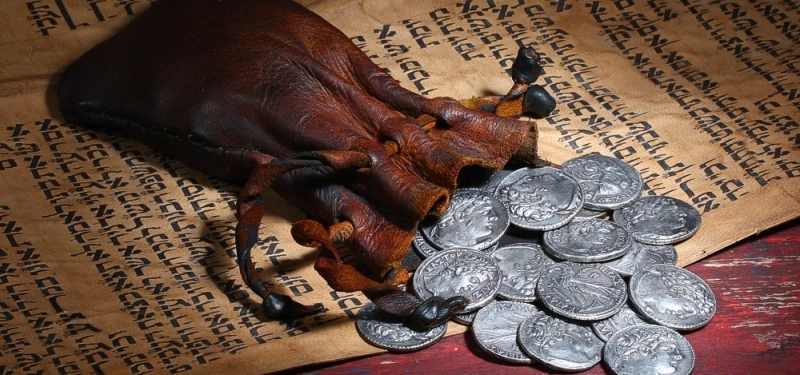
–The ‘changing of money’ as it has been described in the most sanitized fashion in the 4 Gospels…
But rather because of this–

…the age-old Judaic practice of sexually abusing and trafficking in women-folk, both adults and children, first described in the book of Genesis when ‘Abram’ sells his wife Sarah as a concubine to Egypt’s Pharaoh so that he will be ‘well treated’, and then a few chapters later when ‘Lott’, the nephew of this same ‘Abram’–
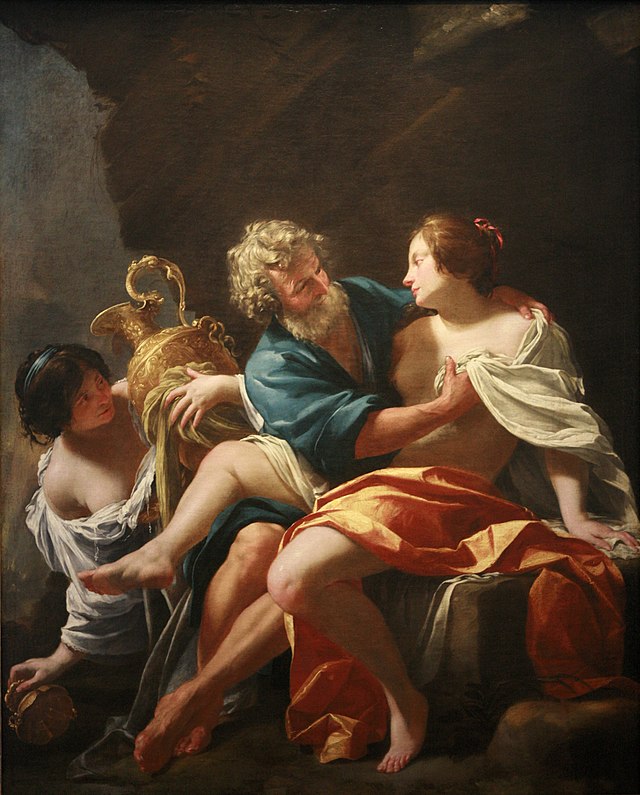
–gives his 2 virgin daughters away to a group of soon-to-be-rapists from the nearby city of Sodom, instructing them to ‘abuse them as you see fit’.
In other words, ladies and Gentile-men, the Judaic ‘bidniss’ of trafficking in women, including children, did not begin with Jeffrey Epstein, and it, in our humble opinion, is the more likely explanation as to why Jesus ‘lost his cool’ and went ‘Indiana Jones’ on everyone with a whip that night.
And it is equally likely, ladies and Gentile-men, that the Jews today, at least those operating at the very top of the food chain, are fully aware of what was taking place at that time and therefore WHY they might ‘commission’ a ‘study’ of the type that you are about to read below.
How much longer, ladies and Gentile-men, will the Epstein hell-portal go before Gentiles (and of those, especially those professing to be the followers of Jesus Christ) begin asking questions about what was the ‘real deal’ involved in the ‘war of the worlds’ between the Jews and the ‘man of steel’ aka Jesus Christ? How long before the lens on all of this begins to come into better focus, and Gentiles, (and again, especially Christians where the bulk of the world’s political, economic, and military power resides) begin to more clearly understand the scope of the war taking place in 33 AD, that it really was a cosmic battle between the powers of heaven and the powers of hell?
And thus, ladies and Gentile-men, why articles of this type suddenly ‘pop up’ in the Jewish press where a new ‘angle’ is explored as to why Jesus reacted in the fashion that He did when He saw what kind of ‘buying and selling’ was taking place that night…
As we like to remind the readers of this website, of the many, MANY uncomplimentary things that can accurately be said about ‘them’, the ‘Children of Israel’, the one thing that cannot be said about them is that they are stupid, because they most certainly ARE NOT.
Times of Israel
A rumbling stomach might have been the reason why an upset Jesus flipped the tables of moneychangers and merchants as he visited Jerusalem ahead of the Passover holiday, claims a team of researchers in a new article published in the peer-reviewed journal ‘Cogent Arts & Humanities’ in December.
The incident, known as the ‘cleansing of the Temple,’ has often been used in Christian rhetoric as a polemic against the Jewish leadership and the Jewish system at that time.
According to Dr. Haggai Olshanetsky, a researcher at the University of Warsaw, clergy and earlier scholars have mostly tried to understand the episode, present in all four Gospels, through the lens of the divine nature of Jesus. But, said Olshanetsky, a close textual reading coupled with the analysis of ancient Jewish sources and archaeological knowledge suggests that Jesus’ human side and character could better explain the situation.
‘There are many contradictions in the story,’ Olshanetsky, one of the authors of the article, told The Times of Israel in a video call. ‘We asked ourselves how we could solve them. The element that most scholars have simply disregarded is that, even within Christianity, Jesus has two sides: human and divine. Everyone tried to explain [the incident] only in terms of the divine side. And we decided to look at the other option.’
Although each version presents different details, the story of Jesus turning the tables is included in the three Gospels of Mark, Matthew, and Luke, which are believed to have been written starting around the year 65 CE, and in the Gospel of John, dating to the last years of the 1st century CE. Experts generally agree on the historicity of the episode.
‘And he entered the Temple and began to drive out those who sold and those who bought in the Temple, and he overturned the tables of the moneychangers and the seats of those who sold pigeons,’ reads Mark (11:15). ‘And he would not allow anyone to carry anything through the Temple. And he was teaching them and saying to them, ‘Is it not written, that ‘My house shall be called a house of prayer for all the nations?’ But you have made it into a den of theives.’
Similar accounts are also found in Matthew and Luke, which describe the episode as occurring just days before Jesus’ trial and crucifixion. In contrast, John’s version includes a more violent altercation in which cattle were whipped away, and it took place at an earlier Passover.
Olshanetsky noted that several aspects of the story appeared difficult to reconcile.
‘Jesus was doing what every Jewish man hoped to do at the time, visit the Temple during Passover, and if possible, sacrifice an animal to God,’ he said.
‘Jesus was Jewish; he never claimed he was starting another religion, and Judaism at the time revolved around the Temple,’ he added.
The scholar pointed out that, for the Temple to function properly and allow tens of thousands of pilgrims to fulfill their religious duty, moneychangers and merchants were essential. People traveled from far away, including from the entire Land of Israel, across the Roman Empire, and beyond, and needed both to pay expenses in local currency and to purchase the animals required for the sacrifice.
‘The suggestion that [Jesus] did not want them in the Temple is problematic because it’s not really mentioned in the Gospels,’ Olshanetsky said.
While in other parts of the Gospels, Jesus criticizes the Jewish religious leadership and the priests, they are not mentioned in this passage.
‘If he did indeed wish to protest, he would have focused his actions on the high-ranking members of the Temple institutions,’ Olshanetsky said. ‘According to what is known about Jesus and his teachings, he would not have expressed his anger toward [the merchants and money changers] who did nothing wrong other than doing their job.’
In addition, the episode did not mark the first time Jesus visited the Temple.
‘He had come to the Temple many times before; he knew what was there,’ Olshanetsky said. ‘So why did he get angry at this specific time?’
According to the scholar, if the disturbance had been that severe, it would have been dangerous to the public and the general peace of the holy site; therefore, it would likely have been noticed by the authorities policing the Temple and prompted their intervention.
‘One of the questions that has not been raised enough is why the gap between that event and [Jesus] being tried,’ Olshanetsky said. ‘According to the Gospels, he either remained preaching in the Temple or came back the day after, and he was already famous. [The authorities] were looking for ways to arrest him. If he had caused all this disturbance, this could have been a good reason.’
Instead, it would require a few more days and Judas’ betrayal for the authorities to identify and arrest him, according to the Gospels.
A tired traveler
The study suggests that the episode should be read through the lens of what Jesus himself was experiencing at that moment as a ‘tired traveler’.
The authors looked at the verses immediately preceding the story.
‘And he entered Jerusalem and went into the Temple,’ reads Mark (11:14). ‘And when he had looked around at everything, as it was already late, he went out to Bethany with the twelve. On the following day, when they came from Bethany, he was hungry. And seeing in the distance a fig tree in leaf, he went to see if he could find anything on it. When he came to it, he found nothing but leaves, for it was not the season for figs. And he said to it, ‘May no one ever eat fruit from you again.”
The encounter with a fig tree occurs immediately after the cleansing of the Temple in Matthew, but not in John. According to Olshanetsky, this might indicate that it came from earlier accounts of Jesus’ life that were later incorporated into the Gospels.
‘Why is Jesus going to the Temple at night? There wouldn’t be anything to do there, except maybe he looked for the money changers, as we suggest, because he needed small change,’ he said.
Back then, a single silver coin could be worth hundreds of bronze coins, which might explain why it was preferable to travel with silver and exchange it in Jerusalem.
A small change was essential for city expenses, especially for buying food. Jesus and his group were not wealthy, as evidenced by their decision to spend the night in Bethany, a less expensive village outside Jerusalem.
‘In the morning, we actually see that [Jesus] is very hungry, because when he sees a fruitless tree, he curses it,’ Olshanetsky said. ‘This is very human; when you are hungry, you’re a bit short. He goes to the Temple again to look for the money changers, and something happens again.’
Olshanetsky said that a plausible explanation for the episode is that Jesus did not erupt against the whole array of merchants and money changers, but rather against the specific one he was dealing with, possibly because he felt he had been cheated or wronged. This would explain his reference to robbers — and why the authorities did not intervene, Olshanetsky said, positing that the disturbance was not as severe as it may seem at first glance.
At the time, several currencies were in circulation. The silver coinage included the Tyrian shekel, Antiochene tetradrachm, and Egyptian billon tetradrachm. The latter contained much less silver than the other two.
‘If [Jesus] got an Egyptian coin whose silver content was 30%, but he believed that it was worth the same as an Antiochene or Tyrian silver coin, which were 90% silver, he got in exchange for his coin a lot less than he thought he deserved,’ Olshanetsky said.
The Mishnah — the first major codification of the Torah’s oral law, compiled around 200 CE from earlier sources — appears very concerned with the problems of coin authenticity and exchange, showing that the value of coins could pose real challenges.
On the contrary, contemporary Jewish sources almost do not address the question of sacrificial animal prices, suggesting that the problem was not as present in people’s lives.
Although the ‘cleansing of the Temple’ story has for centuries been used as one of the symbols of Jesus’ criticism towards the Jewish leadership, fueling Christian stereotypes against Jews, Olshanetsky said he did not really encounter this type of attitude in the academic literature he has researched for the study.
He maintained that the original story has no connection with anti-Jewish sentiments.
‘This text stands better the historicity test because it is not embellished, it does not show the divine in Jesus; the divine interpretation is [what] people try to put in later [based on] things that are not written,’ Olshanetsky explained.
‘This is just part of Jesus’ story and life as a normal person in Judea, a normal person but also a religious figure,’ he said. ‘How it was used later is something else.’